CART 211 — Creative Computing and Network Culture
Department of Design and Computation Arts, Concordia University. Prerequisite: enrolment in a Computation Arts program.
The course introduces the fundamentals of creative computing and network culture. Students learn to build and publish web-based media with HTML, CSS, integrating JavaScript fro interaction and to read the network they are publishing into. Technical work and critical work advance together: every tool taught in the lab is also treated as a cultural object with a history and an economy.
The history of the web as a working method
The course begins before the browser. The history of the computer, the origins of the Internet and the history of the Web occupy the opening weeks, followed by the history of artificial intelligence. Vannevar Bush's As We May Think and Roy Rosenzweig's account of how the Internet's history has itself been written serve as anchors. Knowing how a protocol, a page or a model came to exist is what allows a student to see the current state of the web as one outcome among several, rather than as a natural given.
The mechanisms behind the aesthetics of social networks
A second thread examines what produces the look, the rhythm and the feel of the platforms students use daily. Surveillance and engagement are approached as design mechanisms rather than side effects: behavioural data collection, predictive markets, ranking and recommendation, infinite scroll, and the interface conventions that maximise time spent. Shoshana Zuboff's The Age of Surveillance Capitalism, Yuval Noah Harari's Nexus, Mustafa Suleyman's The Coming Wave, Artie Vierkant's essay on post-internet art and Omar Kholeif's Internet_Art support this reading. The objective is concrete: that a student be able to look at a feed and name the decisions that shaped it.
Critical thinking and artistic response
The final project asks for a conceptual website of ten screens, developed through pitch, sketches, prototype and public presentation. Learning HTML and CSS matters here because it gives back the ability to publish outside the templates — a page one writes oneself is a position taken. Students leave able to respond artistically online, not only to circulate within it.
Assessment is divided between workshops in HTML, CSS and JavaScript (40 %), the final project (40 %) and contribution, peer review and weekly reading reflections (20 %). Assignments are published on the department server, so every submission is a live page.
DART 453 — Design and Community Engagement (no longer held at Concordia)
Concordia dans la rue. Department of Design and Computation Arts, Concordia University.
For the Design department, engaging with the community means putting into practice the programme's philosophical directive: creating links with Montreal communities through student internships built around collaborative projects and public artworks. The class aims at creating sustainable development tools in digital literacy, art and communications.
Students prepare two internships of approximately twenty hours each, one in the fall term and one in the winter term. They work with an individual, a group of participants or directly with an organization to produce a book, music, postcards, posters, a newsletter, a web design, a video, board games, a digital reflexive portfolio, an animation, a film, a painting, a sculpture, a dance piece or an installation.
Other students focus on the edition of the work: preparing shows, setting up websites for the projects, producing a printed brochure, or producing a CD or DVD. A few approach the class in a more reflexive way: finding new partnerships, developing a series of workshops, producing video interviews, making a video documentary, or finding new approaches to design and community engagement.
Internships may be carried out at Concordia University, in a community or non-profit organization, or both. The second internship often follows on from the first with the same organization.
- Course outline
- Internship planning
- Internship evaluation grid
- Participants evaluation
- Internship protocol
- Special project planning
- Podcast Le why du comment on Spotify — Apple Podcasts
Since 2018 — YWCA Y des femmes de Montréal, S'entreprendre
Partners: YWCA Montreal, Concordia University, Fondation Lise Watier, Centre de ressources éducatives et pédagogiques (CREP).
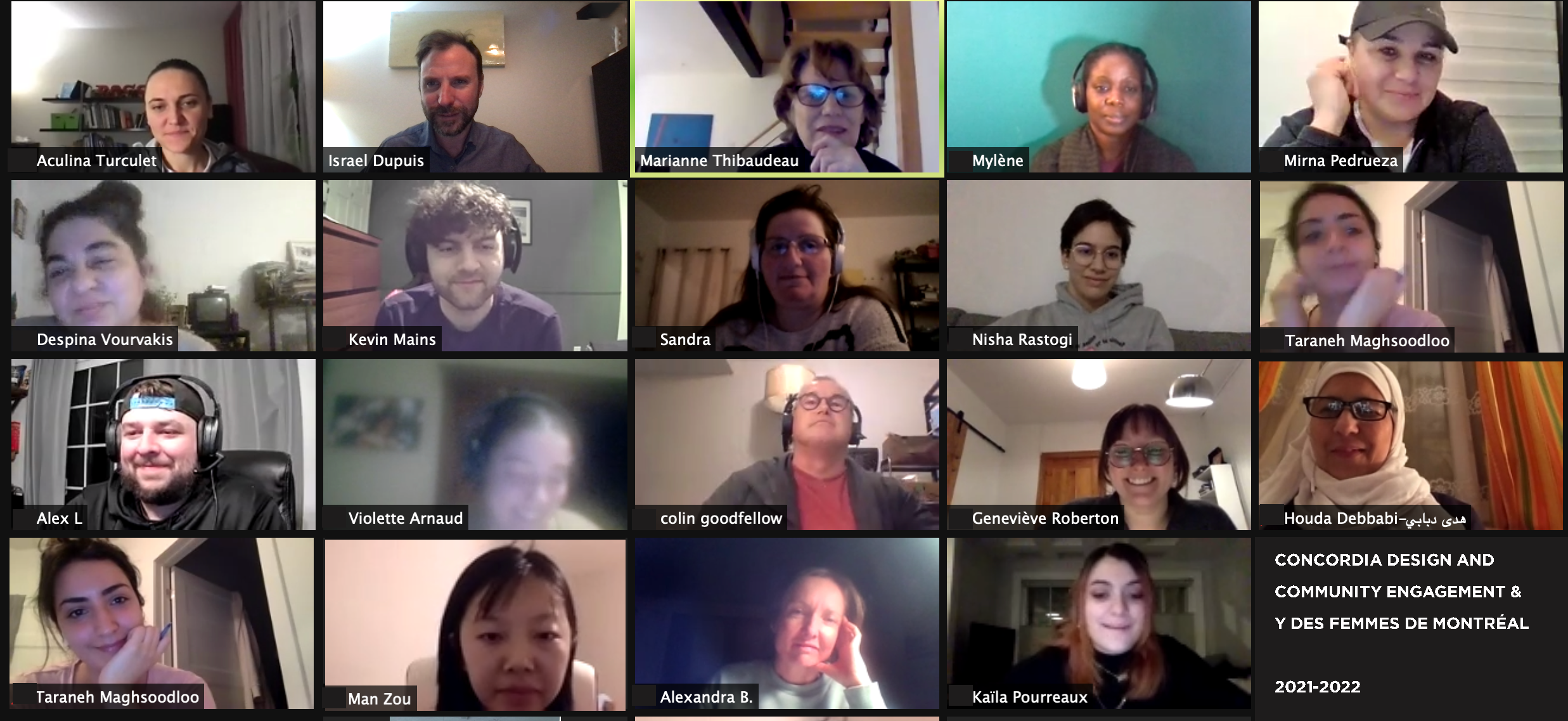
Participants from the Women's Y and Concordia students are paired up to bring women's small business projects to life. About fifteen women attended the weekly digital literacy workshop each year. The same number of students showed up every week in the classroom, creating a live lab that produced a large body of design and branding projects.
2003 to 2018 — Multimedia collective creation with high-risk youth
Partners: DESTA Black Youth Network, Concordia University, Université du Québec à Montréal (UQAM).
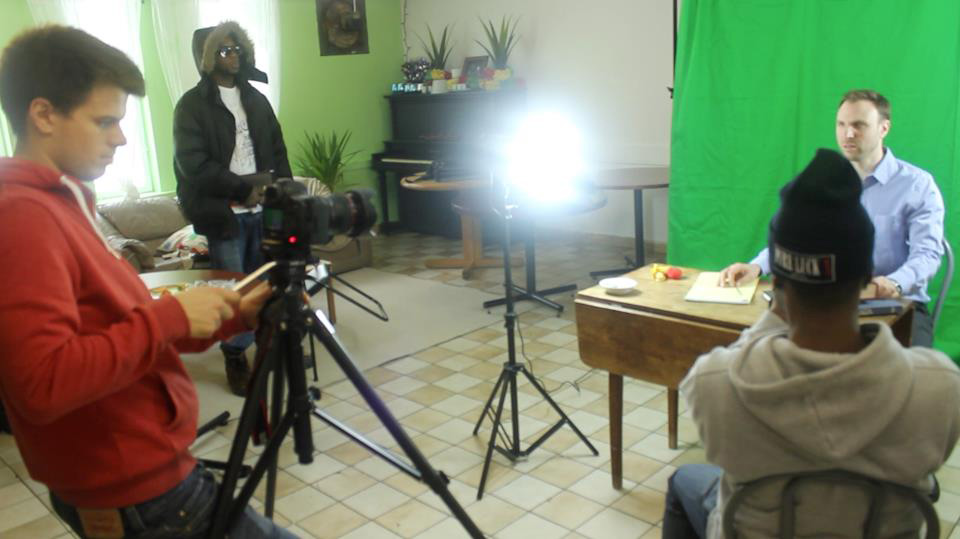
The video The Struggle was shot in partnership with DESTA Black Youth Network and Concordia University (Design and Computation Arts), as part of Israël Dupuis's master's thesis project at UQAM in communication.
It is the result of a collaboration between DESTA participants — Cedric Kabango, Iman Brown, T'nias Robertson, Azariah Robertson (Triston), Mustapha Thomson (Moose) and Shavoun McLean (Widget) — and Concordia students Meryam Joobeur and Derek Bradscome, under the direction of design lecturer Israël Dupuis.
The work was put online to promote collaborative projects and raise awareness of difference in our society. It states that everyone has to go through their own struggle, and that we should understand and help each other get through them.
From the making of this video, a 45-minute video collage, Indignato Va Versum, was produced. This ethnographic film is the core of the thesis La création collective multimédia chez les jeunes à risque : un moyen pour aider à passer au travers des coups durs. It explores the use of direct cinema techniques in conjunction with art therapy and gestalt therapy intervention frameworks. The work is the ground for relational aesthetics approaches to collective creation in the context of proximity work: it shifts from the youth worker's helping relationship toward a sincere relationship between the artist and the participants, both considered equal in the creative process.
North project
Partners: Kativik Ilisarniliriniq (2015), Concordia University.
The project consists of a series of books collectively created with youth from Kangiqsujuaq, an Inuit village in Nunavik, northern Quebec. Under the direction of Israël Dupuis, design students produced a book in collaboration with Inuit students through social networking exchanges.
At the end of this year-long project, and after several fundraisers, youth from the North were able to fly to Montreal with their teachers and youth workers. They took possession of their book at Concordia University during the end-of-year show of DART 481 Design Outreach, taught by Israël Dupuis.
The project is the ground for further research on how collective creation and the tools of computer arts can support school perseverance within traditional societies in the North of Quebec.
Israël Dupuis
BFA Design Arts, Concordia University
MA Communication, Université du Québec à Montréal
Professeur, Cégep du Vieux Montréal, design graphique
Part-time faculty, Concordia University, Design and Computation Arts
Instagram · LinkedIn · YouTube · TikTok · Facebook · Pinterest · X · Spotify · Apple Podcasts